
Last updated October 15, 2026
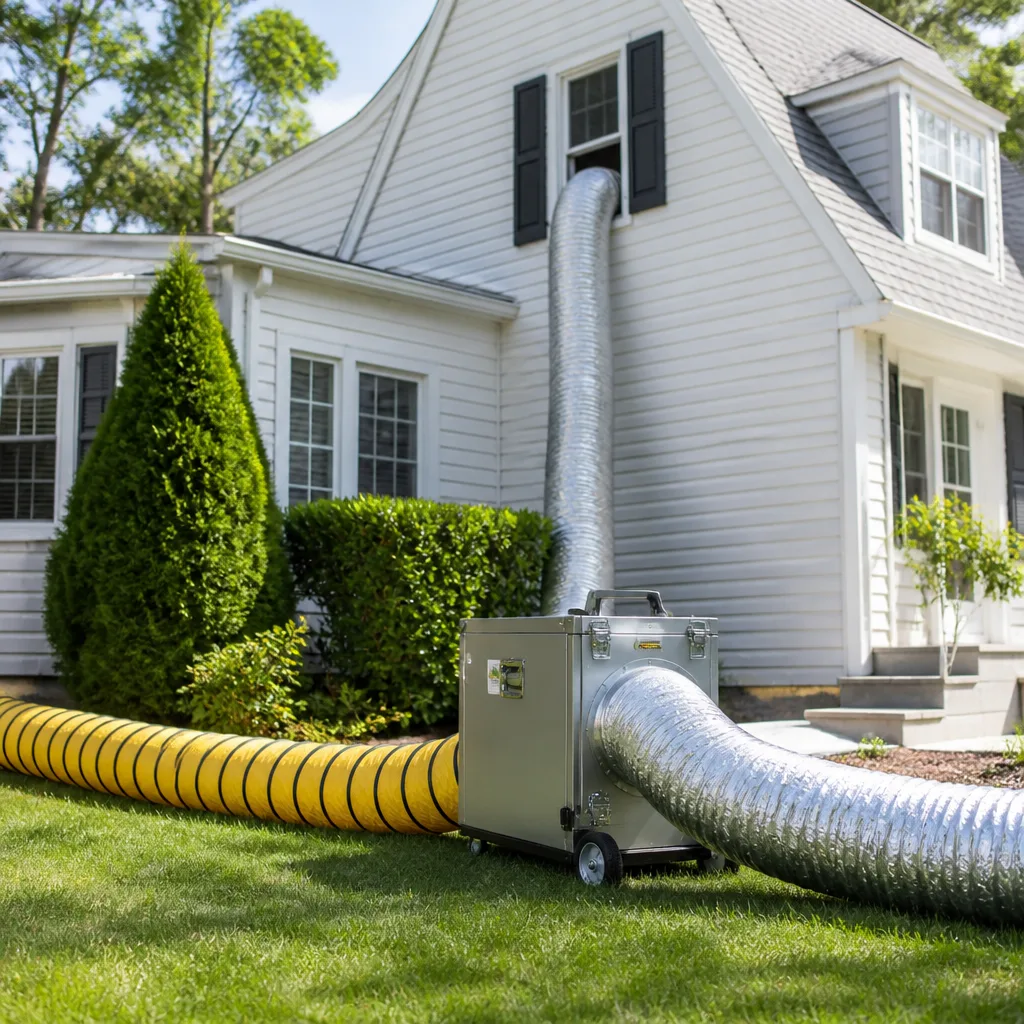 Whole-home duct cleaning
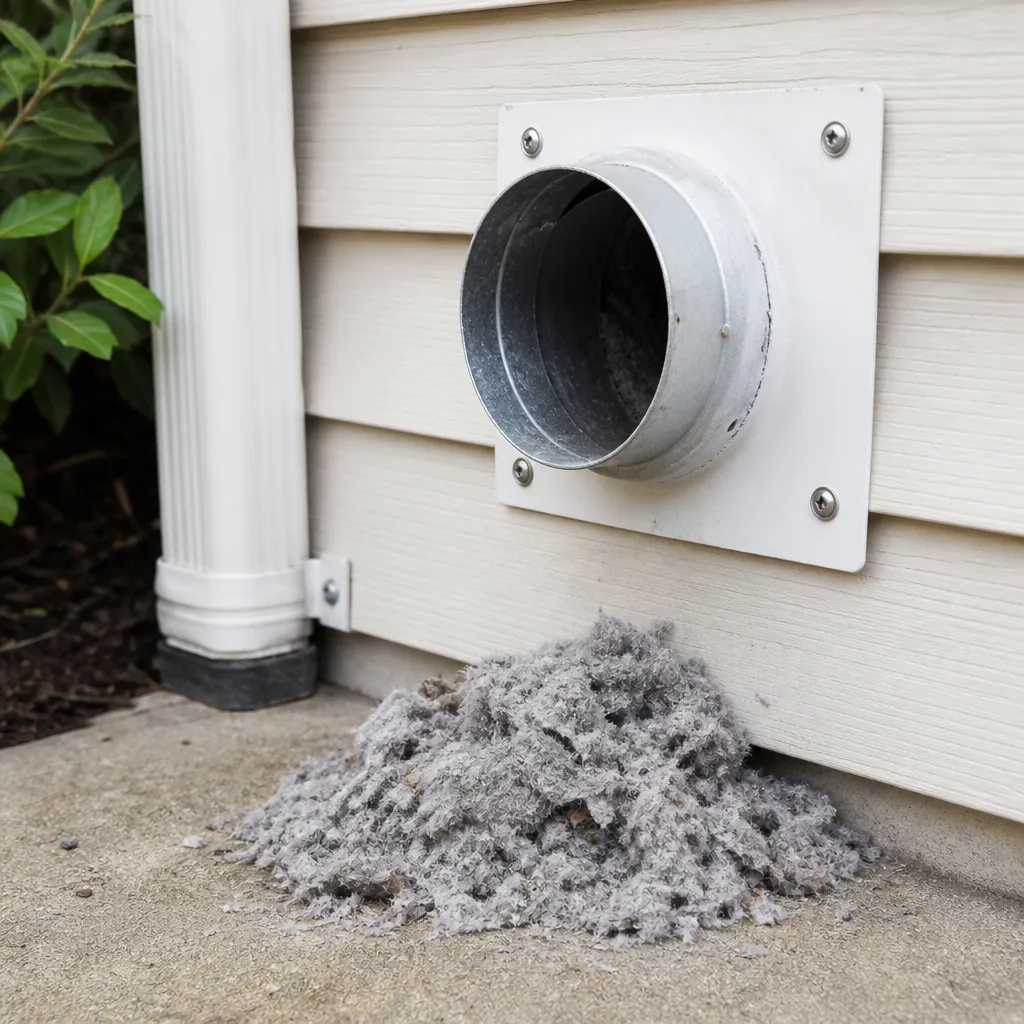 Dryer vent cleaning
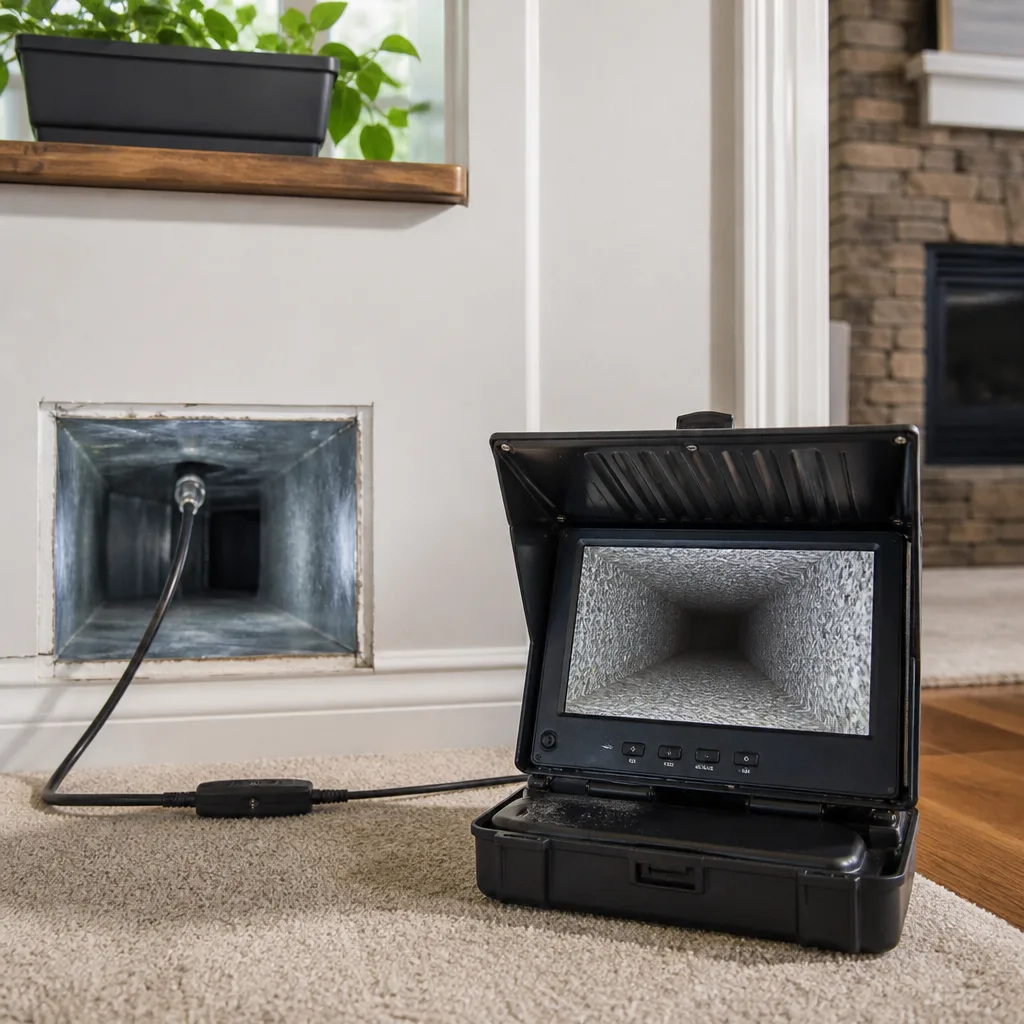 Camera inspection
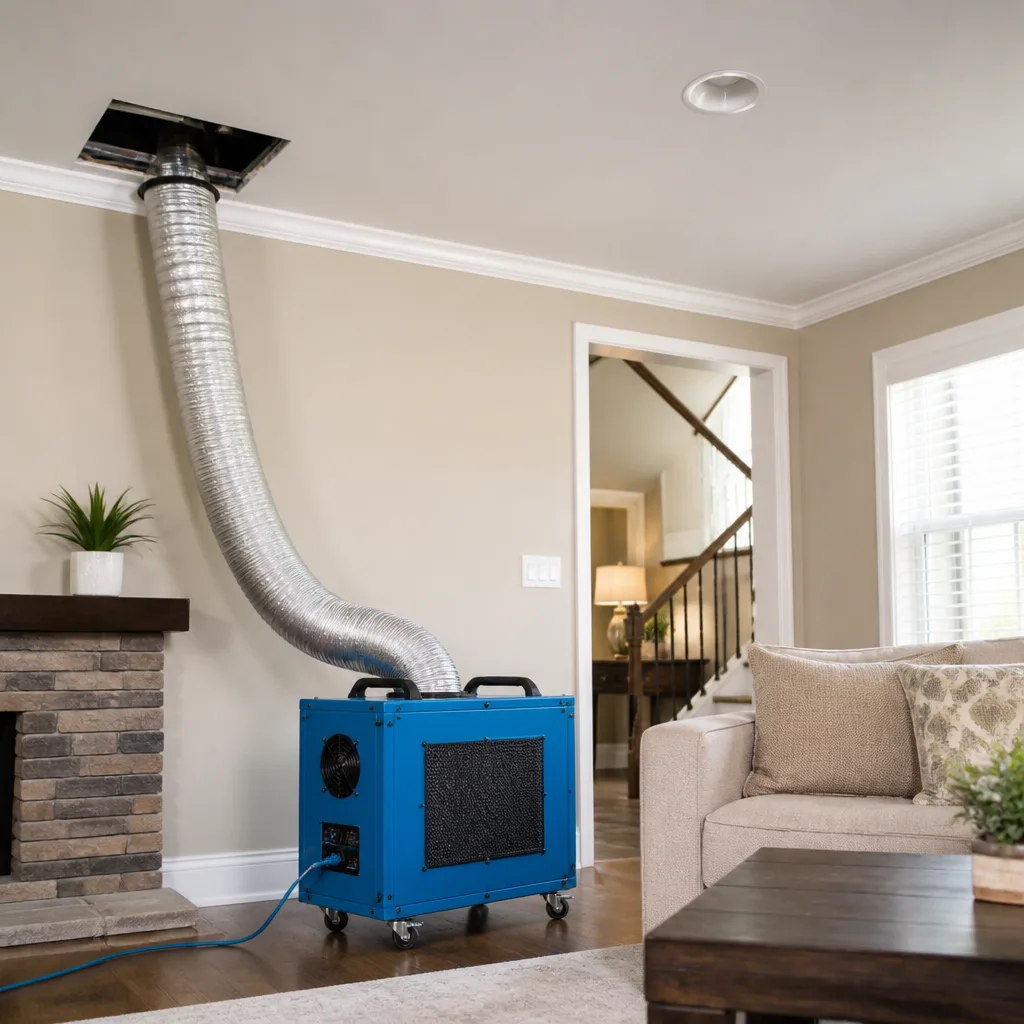 Sanitizing & deodorizing
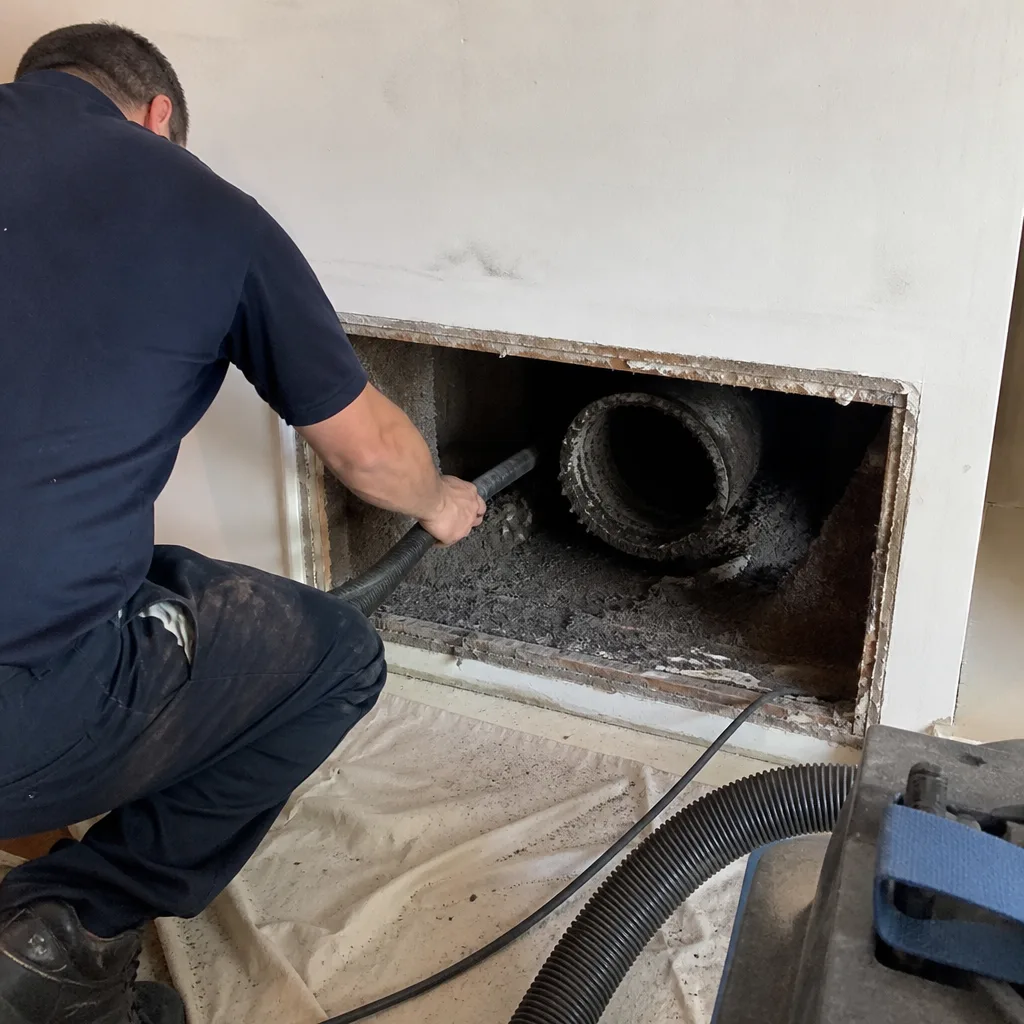
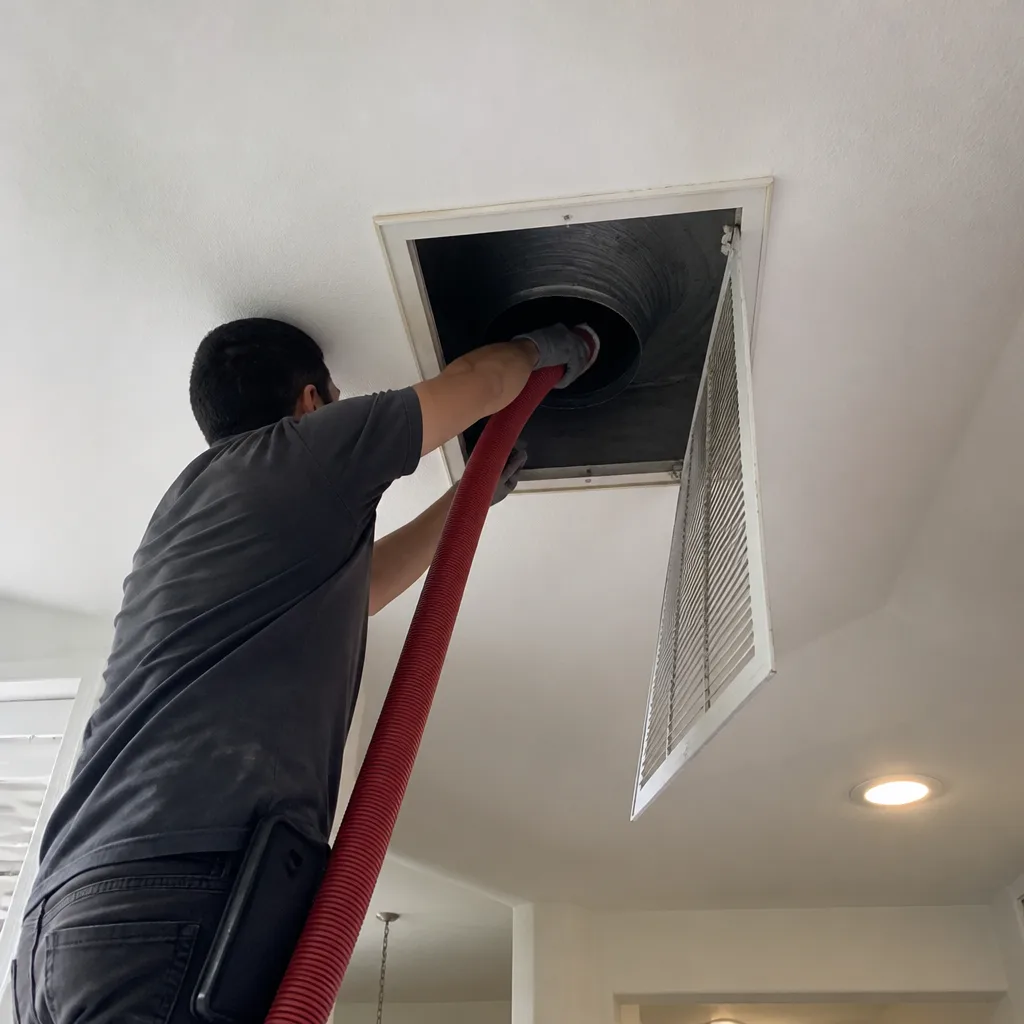
Whole-system duct and dryer vent check with before-and-after photos - you see exactly what came out of your vents
That "$99 whole-house special" is a bait ad - the real number appears once they are in your hallway, or the "clean" is a shop-vac at the register. We photograph the inside of your ducts before and after instead.
DIY vs Professional Air Duct Cleaning: The Orange County Homeowner’s Decision Guide
The most popular DIY duct cleaning kit on Amazon generates roughly 130 CFM of suction. A professional Rotobrush negative-pressure system pulls between 2,000 and 4,000 CFM. That’s not a marginal difference – it’s the difference between disturbing dust and removing it. Orange County homeowners who attempt DIY duct cleaning often start with a $40 kit and a Saturday afternoon, and end up with loosened debris circulating through their homes and, in some cases, punctured flex duct that costs $1,200 to repair. This guide covers what DIY can honestly accomplish, where it fails, and how to make the right call for your home, your budget, and your family’s air.
Styles & brands we work with
Quick Answer
DIY duct cleaning with consumer vacuums and brush kits is generally ineffective for actually removing debris from your ductwork, and in flex-duct systems common across Orange County tract homes, aggressive brushing can puncture the duct lining. What DIY can do well is register cleaning, filter replacement, and visual inspection – tasks that keep you informed and your air moving between professional cleanings. If you can see visible dust buildup, smell musty air when the system runs, or haven’t had ducts cleaned in 5+ years, Air Duct Cleaning services from a professional using negative-pressure equipment is the honest answer.
Table of Contents
- The Physics Problem: Why Your Shop Vac Can’t Do This Job
- Orange County Duct Configurations: What’s in Your Attic and Walls
- What DIY Actually Does Well: The Safe, Useful Tasks
- The Orange County Duct Cleaning Decision Tree
- Warranty, Liability, and Your HVAC Service Agreement
- Signs You Need Professional Attention Now
- What Professional Equipment Actually Does – and Why Brands Matter
- Common Mistakes to Avoid
- When to Call a Professional
- Frequently Asked Questions
- The Bottom Line
The Physics Problem: Why Your Shop Vac Can’t Do This Job
Air duct cleaning isn’t about making dust move. It’s about removing it from your home. That distinction matters more than most homeowners realize.
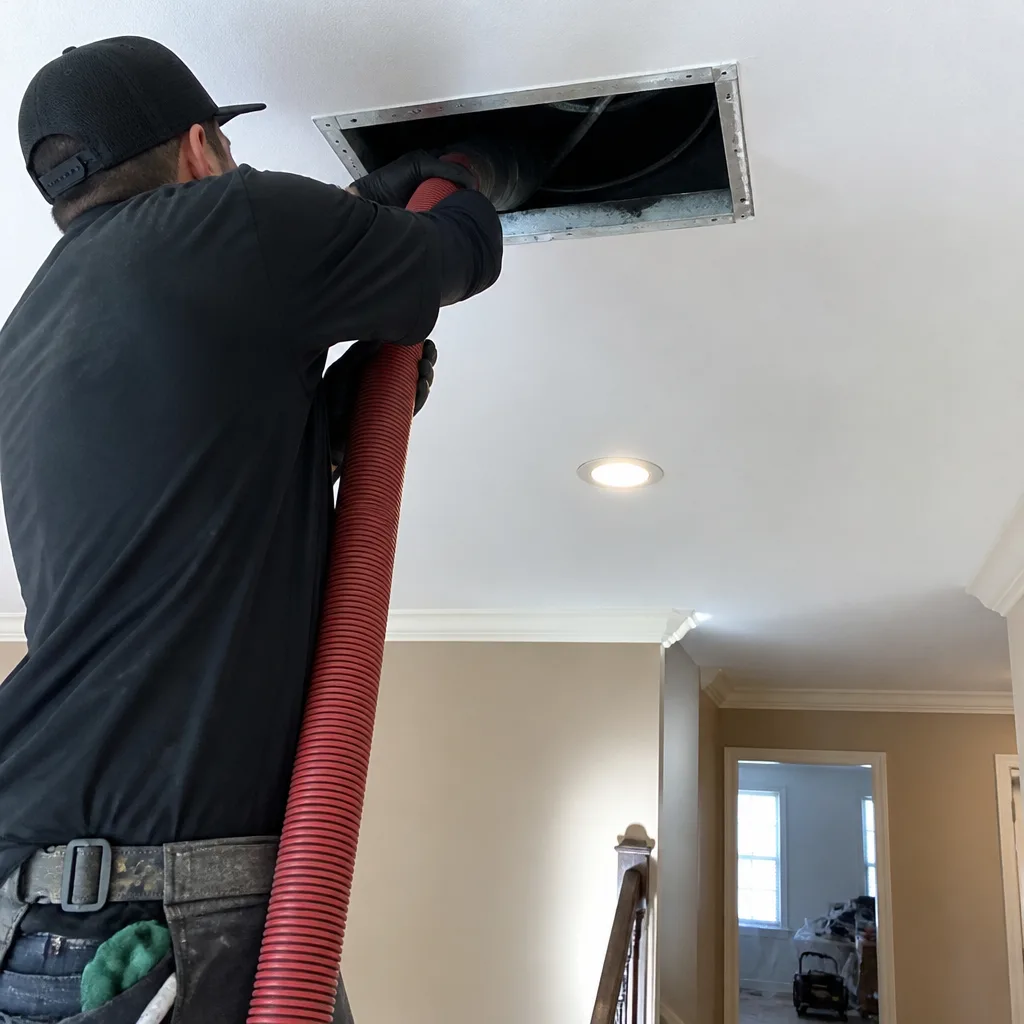
Professional negative-pressure duct cleaning works by sealing the duct system and creating a vacuum strong enough to pull air backward through the vents at high velocity. The equipment connects to the main trunk line and generates enough suction to dislodge debris from the duct walls and carry it into a containment unit – not into your living room. A Rotobrush system, for example, operates in the 2,000 to 4,000 CFM range. That’s the force required to overcome the static pressure of your entire duct run and actually extract material.
Consumer vacuums simply cannot generate this kind of air movement. A standard 6-horsepower shop vac, the kind you probably have in the garage, typically moves 125 to 180 CFM. The Amazon DIY kits marketed specifically for duct cleaning aren’t much better – they top out around 130 to 200 CFM. What does that mean in practical terms? The vacuum is strong enough to disturb dust, loosen particles from the duct walls, and push debris further down into the system. It is not strong enough to capture what it disturbs.
In our experience working on homes throughout Orange County, the pattern is consistent. A homeowner runs a brush kit through a vent, knocks loose a decade of accumulated dust, but the vacuum can’t keep up. Some of that dust falls back into the duct. The rest, the lighter particles, get picked up by the airflow when the HVAC system cycles on and distributed throughout the house. “I cleaned my ducts” becomes “I made my dust airborne and put it on my furniture.”
There’s also a containment issue. Professional systems use negative pressure to keep particles moving in one direction – out. Consumer vacuums, even with good filters, don’t create a sealed environment. Unless it’s a proper HEPA unit with genuine sealed filtration, at least some of the dust you’re trying to remove gets exhausted back into the room. The visible floor around a shop vac exhaust often tells the story.
Orange County Duct Configurations: What’s in Your Attic and Walls
Orange County housing stock spans distinct eras, and each one has a characteristic duct material that responds differently to aggressive DIY cleaning.
Homes built from the 1950s through the 1970s – think central Fullerton, mid-century pockets of Orange, parts of Anaheim – commonly have rigid galvanized metal ductwork. These ducts handle brushing better than any other material, but they have a different problem: joints. Fifty years of thermal expansion and contraction loosens connections, and a spinning brush run through a corroded seam can separate a joint entirely. In those older OC homes, the ductwork is often original, and those metal seams are already fragile.
The tract-home boom in Orange County ran hard from the 1980s through the 2000s, and those homes – places like Mission Viejo, Lake Forest, Rancho Santa Margarita, large sections of Irvine and Aliso Viejo – are almost entirely flex duct. Flex duct is a wire coil covered in fiberglass insulation and an outer plastic vapor barrier. It’s lightweight, cheap to install, and extremely vulnerable to puncture. The inner lining is thin plastic. A rotary brush spinning against flex duct can tear that lining, especially at bends, and once the inner liner is compromised, you have insulation particles entering the airstream and a duct that can’t maintain pressure. Flex duct repair in Orange County typically runs $80 to $250 per section depending on access, and if the damage is in a hard-to-reach attic space, it can be much more.
Newer builds and custom homes – Costa Mesa, Newport Beach, Laguna Niguel, newer portions of Tustin and Yorba Linda – tend to use a mix of rigid trunk lines with flex branches. The professional approach for these systems uses a combination of negative pressure and specialized agitation tools, but the agitation is tuned to the material. You don’t run a metal-core brush through flex branch lines; you use air-driven tools that clean without abrading the plastic lining.
What does all of this mean for the DIY-considering Orange County homeowner? If you can’t identify with certainty what type of duct material runs through your attic or walls, then brushing is a gamble. In flex duct, that gamble carries a real risk of a repair bill that dwarfs the cost of the professional cleaning you were trying to avoid.
What DIY Actually Does Well: The Safe, Useful Tasks
None of what we’ve said should suggest that homeowners are helpless when it comes to maintaining their HVAC system. Several genuinely valuable maintenance tasks are safe for any homeowner with a screwdriver and fifteen minutes.
Here’s what you can and should do yourself:
- Vacuum your registers and return grilles. Remove each register cover (usually two screws), vacuum the back side, wipe it down with a damp cloth, and reinstall. This removes the visible buildup that would otherwise crumble back into the duct. Do this twice a year.
- Inspect with a phone camera. Turn on the flash, reach into the return (the large grille where the filter sits) and the first few inches of accessible duct, and take a photo. You’re looking for anything thicker than a dust film, any sign of moisture staining, or any evidence of pests. This is the single most useful diagnostic step a homeowner can perform, and it’s what allows you to make an informed decision before calling anyone.
- Replace your filter on a schedule. In Orange County, where the warmth means more system runtime in summer, a 1-inch filter should be changed every 30 to 60 days during heavy-use months. A 4-inch media filter can go four to six months. Set a phone reminder and never “eyeball it” – the filter that looks dirty on the surface is already long overdue.
- Clean around the outdoor condenser unit. Clear leaves, grass clippings, and especially bougainvillea debris away from the outdoor unit. A gentle spray from a garden hose across the coil fins (never a pressure washer) removes the dust and pollen that reduce efficiency. This doesn’t clean your ducts, but it extends the life of the whole system.
- Maintain your dryer vent lint trap. Clean the screen after every load, and every few months, pull the dryer away from the wall and check the transition duct for lint accumulation. You can vacuum what you can see. A full air flow test – how long does a load actually take to dry? – helps you know when it’s time for professional dryer vent cleaning in Orange County.
These five tasks account for the overwhelming majority of safe, genuinely useful DIY HVAC maintenance. They keep air moving, keep you informed about your system’s condition, and do no harm. The step beyond them – physically agitating and vacuuming inside the duct runs themselves – is where the risk/reward calculation flips.
The Orange County Duct Cleaning Decision Tree
Here’s a no-pressure decision framework. Go through each item honestly and see where you land.
You can clean your own registers and skip professional duct cleaning if ALL of these are true:
- Your home is less than 7 years old, or your ducts were professionally cleaned in the last 3 to 4 years.
- You spot-checked with a phone camera and saw only a light dust film, not accumulation.
- No one in the home has asthma, chronic allergies, or other respiratory conditions aggravated by airborne dust.
- The air coming from your vents doesn’t smell musty when the system runs.
- You haven’t completed a remodel, and you have no evidence of rodents or other pests in the attic.
Schedule professional air duct cleaning if ANY of these are true:
- You can see dust buildup on the interior surfaces of your ductwork, especially near the registers or return.
- The system smells musty or stale when it kicks on – this usually indicates moisture somewhere in the system, and ventilation alone won’t fix it.
- A major remodel was completed within the last year, especially drywall work, tile cutting, or floor sanding.
- You’ve had any pest evidence in the attic or inside ducts themselves (chewed insulation, droppings near registers, scratching sounds).
- It’s been more than 5 years since the last professional cleaning, and you live in a home with either working or aging ductwork – in Orange County’s dry, dusty environment, five years is a long time for accumulation.
- Your energy bills have crept upward and the filter is clean, suggesting reduced airflow through the duct system.
- You simply don’t want to climb into an Orange County attic in August. That’s a legitimate reason.
The decision comes down to a simple reality: the cost of professional air duct cleaning in Orange County is predictable and modest – the whole-home range in OC for a typical single-family tract home runs from $300 to $600 depending on system size and accessibility. The cost of repairing a punctured flex duct run in a tight attic is equal or higher, and the cost of living with uncleaned contaminated ducts is not one that shows up as a line item at all, but it shows up in dust on your furniture and air that smells tired.
Warranty, Liability, and Your HVAC Service Agreement
One of the least discussed aspects of DIY duct cleaning is what it means for your system’s warranty.
Most HVAC manufacturers issue warranties that cover equipment components – the furnace, the air handler, the coil – but the warranty language typically includes provisions about proper maintenance and use. If a duct-cleaning attempt dislodges debris that damages the blower motor or clogs the evaporator coil, the manufacturer may consider that improper maintenance and decline the repair claim. We’ve seen this happen in Orange County homes where a consumer brush attachment shed bristles inside the duct run, and those bristles eventually made their way into the blower assembly. The homeowner ended up paying out of pocket for what would otherwise have been a covered repair.
There’s a similar issue with active HVAC service agreements. Many Orange County homeowners enroll in maintenance programs through their utility or through an HVAC contractor. Those agreements often have language covering condition-based service and system cleaning. If you perform DIY work inside the ducts that damages a component, the service provider has a legitimate argument that the damage falls outside their obligation. In a worst case, you void the coverage you were paying for.
There’s also homeowner’s insurance to think about – though, in fairness, duct cleaning rarely rises to the level of a claim. More relevant is the liability issue in rental properties, which are plentiful across Orange County from Santa Ana to Huntington Beach. A landlord cleaning ducts in a rental unit and puncturing a duct would be responsible for the repair and any tenant health concerns that arise. For property owners, the DIY math rarely makes financial sense. The professional route, with documented before-and-after photos and a written service record, protects the asset and the relationship.
Our honest guidance on this point: if your system is under manufacturer warranty or covered by a maintenance agreement, leave ductwork access to someone who will stand behind the work. The risk calculation isn’t just about the ducts anymore; it’s about the legal and financial relationships connected to the system. Find out more about what a professional cleaning involves on our Mortons Air Duct Orange County home page before you decide to go it alone.
Signs You Need Professional Attention Now
Some conditions should trigger a phone call rather than a DIY consideration. We’re not alarmists – we tell Orange County homeowners every week that their ducts are probably fine – but certain signs are objective indications of a problem.
- Visible mold on any duct surface. If you look into a register with a flashlight and see anything fuzzy, dark, or distinctly biological, that is not a cleaning problem. It’s a moisture-and-contamination problem that requires professional assessment to determine where the moisture is entering the system. In OC coastal homes – Seal Beach, Dana Point, San Clemente – the marine layer keeps humidity high even when the inland air is dry, and condensation inside duct runs can support growth.
- Rodent or pest activity. Droppings near registers, chewed flex duct insulation, or attic noises near the duct runs. This requires complete removal of contaminated material and often duct repair or replacement in affected sections – not brushing.
- Water inside the ducts. Staining visible through the register, a wet return grille, or a musty smell that intensifies when the system runs all point to water intrusion. This can come from condensation, a roof leak, or a failed pan. Professional diagnosis first, cleaning second.
- Dust thick enough to see clearly on duct surfaces. A faint gray film is normal. Actual accumulation – dust that you can brush off a surface with your finger and see it move – is beyond what register-level cleaning can address.
- Family members experiencing new or worsening respiratory symptoms at home. We will not tell you that dirty ducts cause asthma, because that’s a claim the science doesn’t support. But dusty air is an irritant, and airborne particulate concentrations matter. If you or a child is waking up congested specifically at home and improving when away, the conversation with a professional is worthwhile.
When in doubt, get an inspection and a quote. The quote should be free, it should be in writing, and it should be based on an actual look at your system. If a company quotes without looking, walk away.
What Professional Equipment Actually Does – and Why Brands Matter
There’s a meaningful difference between the equipment our technicians bring into an Orange County home and what a rental depot or consumer catalog offers. Understanding that difference is the most useful context you can have when evaluating a professional service.
Professional negative-pressure duct cleaning systems from brands like Rotobrush and Abatement Technologies are engineered for a specific job: creating enough airflow to extract materials through long, twisting duct runs and contain them before they re-enter the home. These are the same brands used in commercial and institutional settings, and the difference between a 2,000 CFM system and a 200 CFM system isn’t ten times better – it’s the difference between extraction and agitation.
Nikro equipment, another brand we use regularly, is known for its filtration quality. HEPA filters rated to remove 99.97% of particles at 0.3 microns capture the fine dust that larger filters blow through. On a recent job in a Tustin Hills home, our technician could hold a white gloved hand directly behind the Nikro exhaust and it stayed white. That’s the containment standard professional work demands.
Beyond the cleaning equipment itself, a full-service company carries the supporting tools that protect your home. We bring drop cloths and shoe covers because we’re working in your hallway and living room, not because it’s a selling point; it is an operational necessity when you’re running hoses through a house. The same goes for the photography equipment we use to document every single job – before-and-after photos of duct interiors, and a photograph of the cleaned workspace before the crew leaves.
What about the equipment at a big-box rental? It’s usable for spot work – pulling up a wet spot on a carpet, clearing a lint gallery in a dryer. But it isn’t designed for the static pressure of a full duct run, and rental gear doesn’t include the filtration quality that professional systems are built around. The hardware matters because the outcome depends on it, and in Orange County summers, when the system is moving air through the whole house, the difference shows up in the air quality.
Common Mistakes to Avoid
- Believing a brighter duct light equals “clean.” Shining a light into a freshly “cleaned” duct with a shop-vac job will still show a bright metal surface – because the light reveals the surface, not the film of fine particulate and biofilm that continues to shed. Visual brightness is not a cleanliness metric.
- Using heavy rotating brushes on flex duct. The damage risk is covered above, but it bears repeating: aggressive brushing through flex duct in tract homes from Irvine to Lake Forest can turn a $400 cleaning into a $1,200 repair. Do not brush flex duct with anything other than professional air tools.
- Not replacing the filter after cleaning. Whether DIY or professional, the air handling unit’s filter sees a surge of dislodged dust. It should be replaced immediately after the work, not left in place to become a bottleneck.
- Going by the appearance of the pre-filter on the vacuum. A shop vac pre-filter gathering gray dust “proves” nothing about the duct interior; it only shows you’ve collected some dust. The comparison that matters is what the ducts look like inside, before and after, with the same lighting and camera conditions.
- Falling for $49 whole-house coupons. In Orange County – and in the industry at large – deeply discounted duct cleaning coupons are consistently associated with upsell pressure, partial service, and bait-and-switch pricing. A legitimate, full-service negative-pressure cleaning with trained technicians costs real money. The $49 offer generally covers only the smallest home with ideal access, and the operator recovers the discount once the van arrives.
- Waiting until you smell something. By the time you can smell the system, the accumulation is advanced. Schedule an inspection every 2 to 3 years, even if nothing seems wrong. The cheapest professional cleaning is one that catches problems early.
- Attacking the duct from the wrong end. If you’re determined to DIY, the tool goes in the return opening (where air enters the system), not through the supply registers. Many DIY videos have it backward. Working from the return side directs dislodged dust toward the plenum and filter, where it can be captured, rather than spreading it through the supply runs and into bedrooms.
When to Call a Professional
Call a professional when you see accumulation you can’t reach, when the system smells, when the home has been through a remodel, when there are signs of pests or moisture, or when it has simply been five or more years since the last thorough cleaning. Those are the real triggers. If you’re in any of those categories, there’s a straightforward path forward.
Mortons Air Duct Orange County offers free estimates in Orange County, and the quoted price in writing is the exact price on the invoice. No upsell, no scope creep, no surprises once the equipment is in the house. We use professional-grade equipment from Rotobrush, Nikro, Honeywell, and Aprilaire, and every job is backed by our 365-Day Done Right Promise. Call (831) 244-9367 for an estimate, and we’ll help you make the right call for your home – even if that means telling you the ducts don’t need cleaning at all.
Frequently Asked Questions
For a typical single-family home in Orange County, full-system air duct cleaning runs between $300 and $600, depending on the home’s square footage, the number of supply and return registers, and ease of attic access. Homes with extensive duct runs or difficult configuration can run higher. A written quote before work begins is standard for reputable providers – and at Mortons Air Duct Orange County, that quote is the price on your invoice, guaranteed. Call (831) 244-9367 for a free estimate specific to your home.
Some companies underprice the initial visit and make their margin on add-ons during the job – sanitizer treatments, “required” filter upgrades, or inflated repair recommendations. Others provide a superficial clean with low-power equipment that amounts to a quick vacuum of the registers rather than a full negative-pressure extraction. A $49 “whole house” coupon in Orange County almost always means the low price applies only to a very small, accessible system and the sales conversation continues from there. If a price seems far below the market, ask exactly what’s included and whether the quoted number is the final total. A company that won’t give a written, itemized price before the equipment comes off the truck is not one you want in your attic.
A professional company should provide before-and-after documentation. The minimum standard is a written report of what was cleaned, what was observed, and what the technician recommends. Better – and this is our standard at Mortons – is photographic proof: interior duct photos taken before and after, showing the same register locations with the same lighting. We also photograph the cleaned workspace before the crew leaves, so there’s no question about how your home was left. If a company won’t show you inside your own ducts, that’s an answer in itself.
For most Orange County homes, every 3 to 5 years. Homes with pets, recent remodels, or occupants with respiratory sensitivities benefit from the shorter end of that range. Homes in coastal areas – Newport Beach, Huntington Beach, Dana Point – may need more frequent attention because the humidity supports more biological growth in dust accumulations. If you’re replacing your HVAC filter monthly because it loads up fast, that’s often a sign the ducts are contributing to the picture and a cleaning makes sense sooner.
Register vacuuming, filter changes, and visual inspection are completely safe and we recommend them to every Orange County homeowner. What’s riskier is running brush tools through duct runs themselves, especially in flex duct systems. Flex duct is easily punctured by aggressive brushing, and the interior lining tears are not visible without camera inspection. The biggest risk, though, is doing partial work and believing the job is done: a DIY cleaning can disturb material without extracting it, making your home dustier than it was before. If your system is flex duct and the thought of an attic access in August is already making you sweat, save the lunch break.
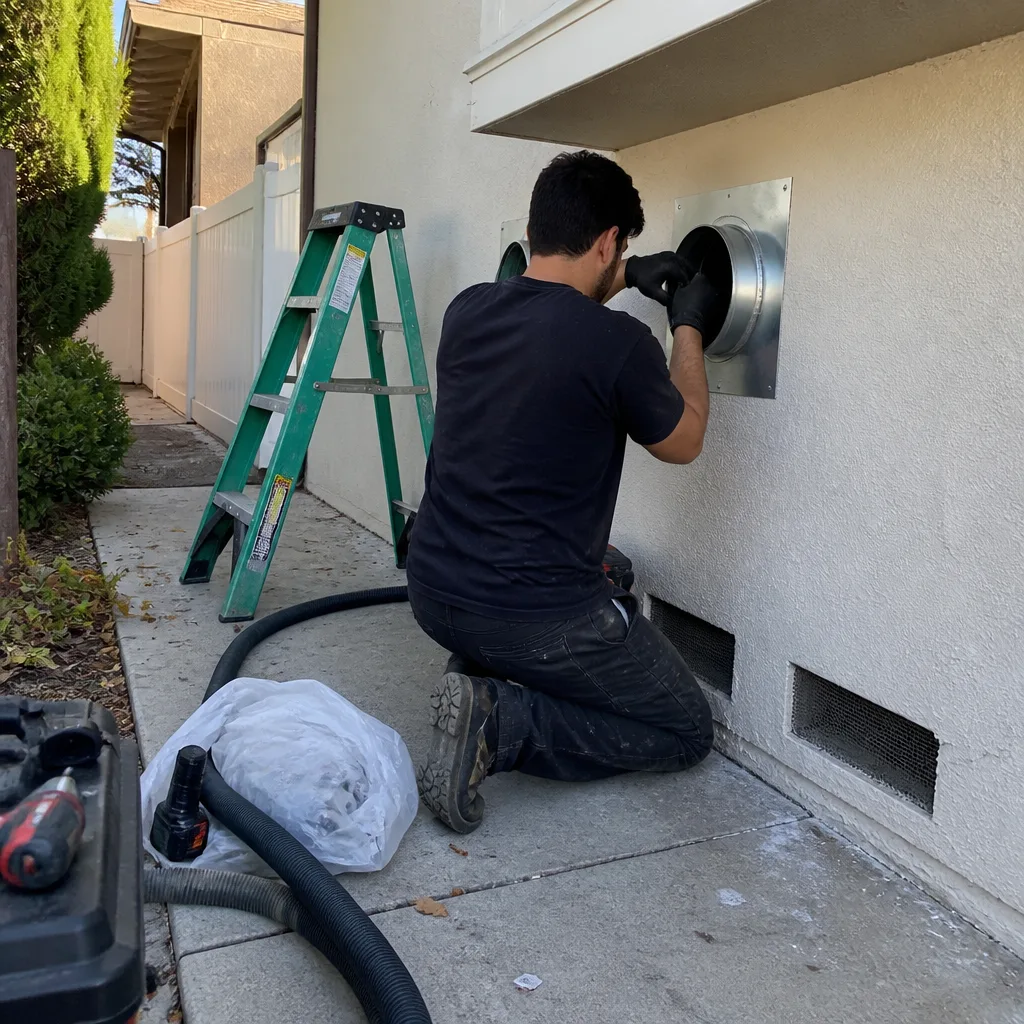
Air duct cleaning covers the HVAC system – the supply and return ducts, the plenum, and the air handler – and works to remove accumulated dust, debris, and sometimes biological growth from the air you breathe. Dryer vent cleaning clears the exhaust path behind your clothes dryer, where lint accumulates and creates a fire hazard. They’re different systems, different equipment, and different safety profiles, and both are services we provide. Our air duct cleaning service in Orange County covers the HVAC side thoroughly, and our dryer vent cleaning in Orange County handles the laundry side. A full home assessment should look at both.
The Bottom Line
The honest version of this decision comes down to what you can actually accomplish. You can clean registers, change filters, inspect visibly, and maintain the periphery of your system. What you cannot do with consumer equipment is extract debris from inside duct runs, and attempting it on flex duct carries a puncture risk that costs more to repair than the professional cleaning you were avoiding. The right answer for most Orange County homes is a middle path: do the safe, free, regular maintenance yourself, and have a professional negative-pressure cleaning every 3 to 5 years. For more guides & resources on keeping your system healthy between visits, see our blog. The cost is modest, the equipment difference is enormous, and the peace of mind is real.
Written by Paul Adeyemi, Owner at Mortons Air Duct Orange County, serving Orange County since 2005.
See the difference
 Before
 After
After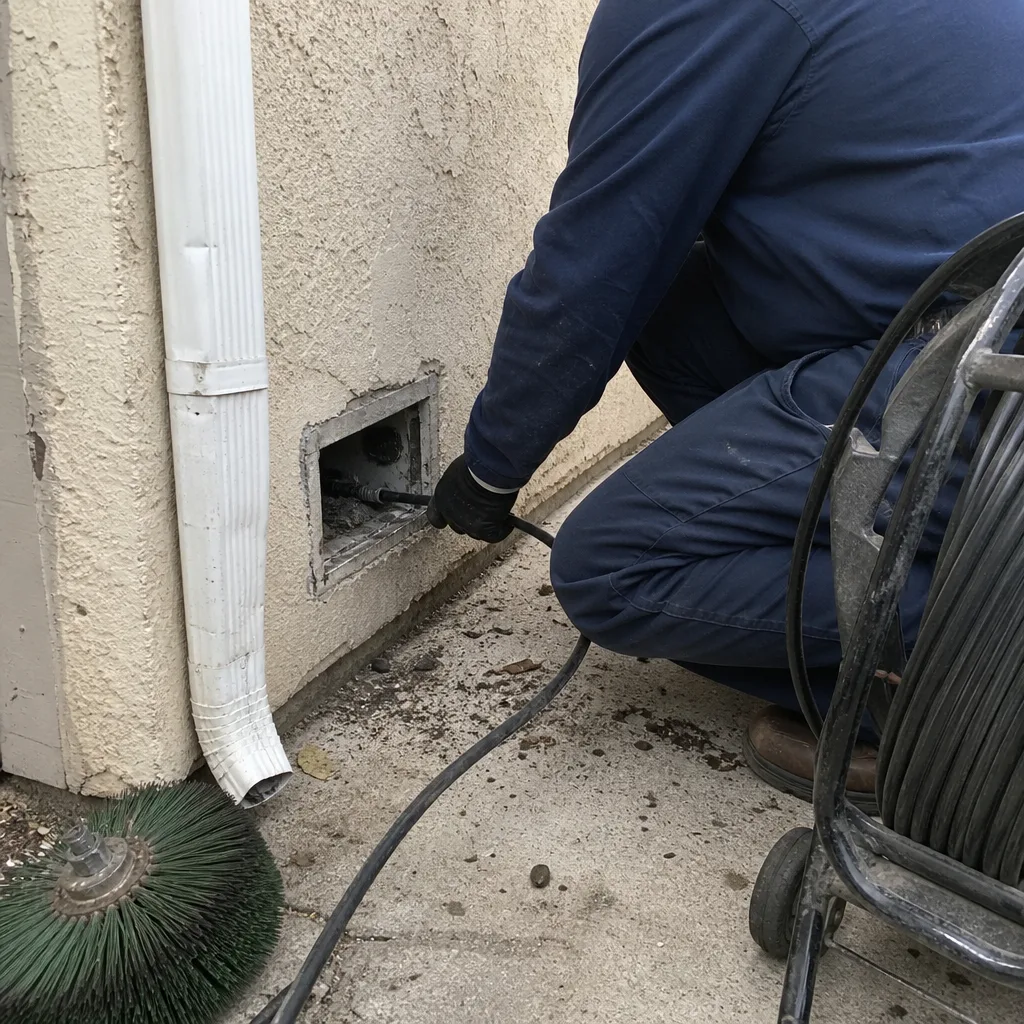 Before
 After
After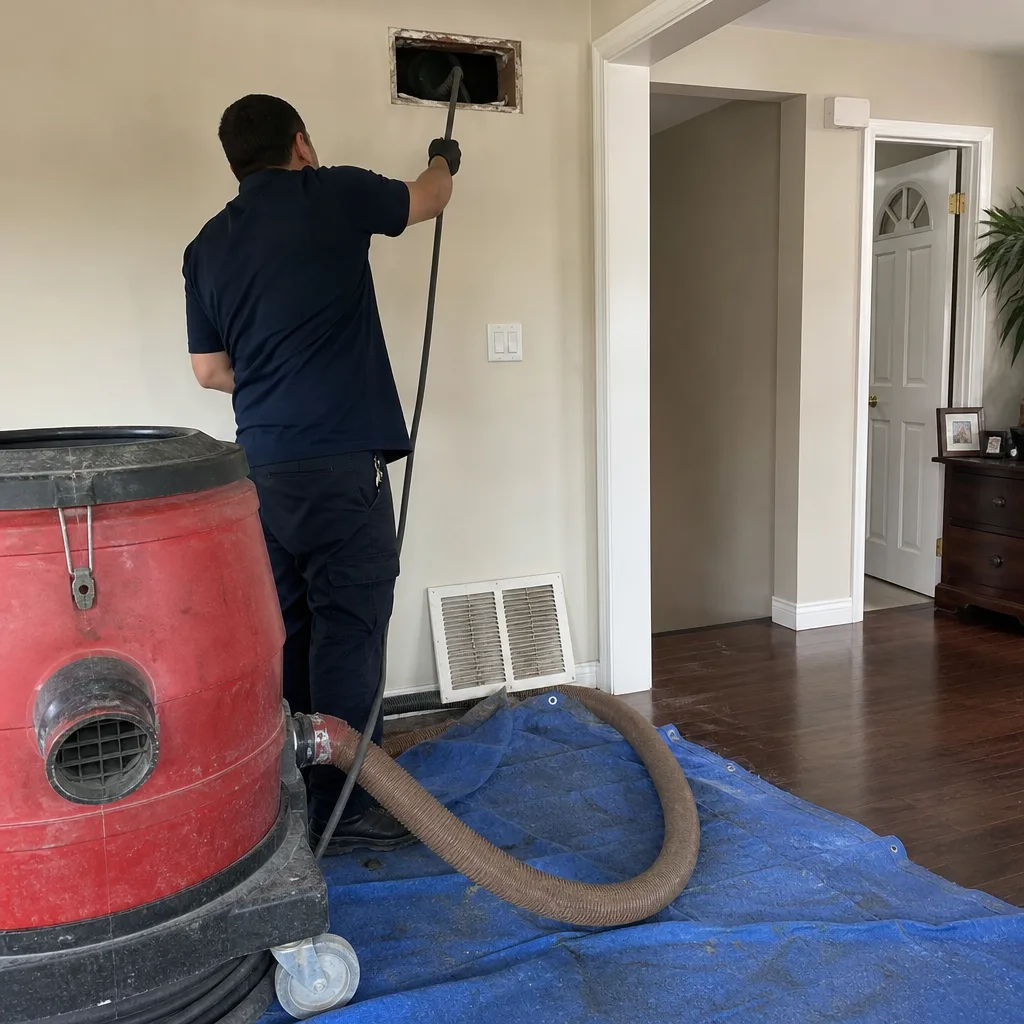 Before
 After
After